Wednesday, October 15, 2008

Taino Regalia


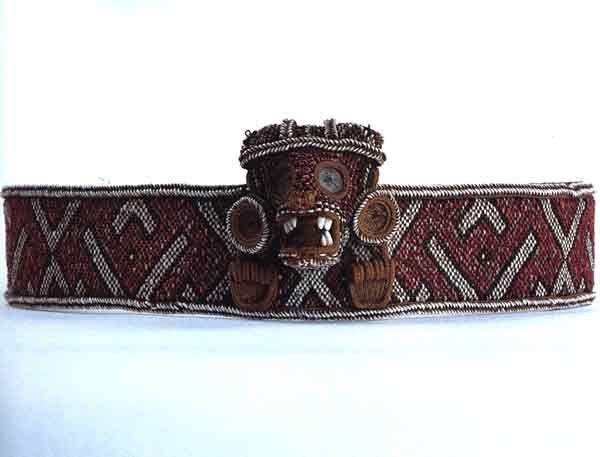
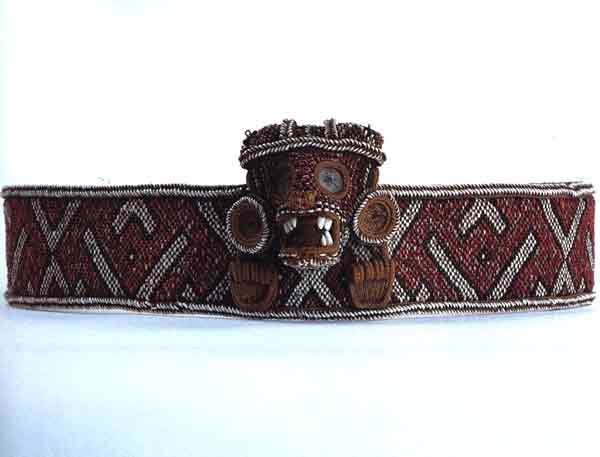
Did You Know - Taino Kasike (Chiefs) and nitaíno (community leaders) distinguished themselves with their clothing, regalia, jewelry, and other accessories. They wore garments of the finest woven sarobei (sarobey) cotton and beaded belts with geometric designs. For important occasions they sometimes donned capes made from the colorful plumage of tropical birds: parrots, flamingos, herons, and hawks, etc. Traditionally, beautifully worked shell jewelry - including necklaces and pectoral ornaments - and amulets made from gold, semiprecious stones, shell, and bone were worn. Other community members also wore types of cotton clothing and adornments as well including headbands and woven caps. Bodies were also painted with various natural dyes and body stamps were used. Ear plugs known as tatagua were worn by both men and women and today this practice is seeing a limited, but vibrant revival. - - UCTP Taino News © 2008 

Wednesday, September 24, 2008

Mayagüez


Did You Know - Local tradition holds that while the city of Mayagüez, Puerto Rico was originally named "Our Lady of the Candelaria of Mayagüez", the city’s name derives from a variation of the Taino Indian term iagües (yagüez) meaning “clear waters”. The city was eventually named just Mayagüez (pronounced Mah-yah-goo-ehz or Mah-yah-GWEHZ), a variation of the Taino term, said to mean "Land of the Clear Waters". – - UCTP Taino News © 2008

Sunday, August 24, 2008

Biha (Bija, Bixa) is a Taino Word


Did You Know - The Biha, Annatto or Achiote tree (Bixa orellana) has seeds that were ground and made into a bright red dye that the Tainos also called biha (bee-hah). According to ancient Taino tradition the color red was associated with virility and the ancestors, but this red paste also served as a mosquito repellent. Taino often covered their whole body in biha. Local tradition on various islands states that it is in the use of  red biha coloring where the derogatory term “Redskin” finds its origin. Today, biha is more often used as a natural food coloring that provides Caribbean rice with its reddish-orange color as well as the yellow color in processed American cheese. - UCTP Taino News © 2008

Saturday, July 12, 2008

Taino Guayuko


DID YOU KNOW - The Spanish chronicler Gonzalo Fernandez de Oviedo y Valdez (1478-1507) recorded the word guayuko or guaiuko to refer to a type of breech cloth that was small and covered the genital area. A breechcloth (sometimes called Lioncloth) is a long rectangular piece of cloth. It is worn between the legs and tucked over a belt or cord, so that the flaps fell down in front and behind. In Boriken (Puerto Rico) the word was widely used in the rural areas and coastal cane fields and came to refer to an old pair of worn Khakis working pants up until around the 1950s. Although the term has largely fallen out of use some elders and language enthusiasts have kept the word alive. A similar term is nagua. Although the original Taíno term nagua referred to a breech cloth over the years it has come to refer to pantyhose and is sometimes also called enagua.- - UCTP Taino News © 2008
Sunday, June 15, 2008

Guaisa


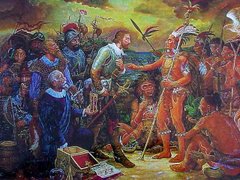
DID YOU KNOW - In his diary written from a vessel moored off the coast of Hispanola, Columbus described the Taino Kasike (chieftains) wearing intricately carved, small sized mask or amulets around their necks. The Taino call these little mask pendants "Guaisa" and often they were inlaid with gold. Some contempoary Taino translate "guaisa" to mean "our face or "our seed". Guaisa could be fashioned out of clay, wood, bone, shell or even stone. - UCTP Taino News © 2008
Monday, May 05, 2008

Parrots and Taino

Did You Know - The ancient Taino people developed an ingenious and sophisticated way of trapping certain birds especially parrots. To capture the birds, children would wear a specially woven hat made from palm tree material, and then hide in selected trees. Once in the tree, the children would also coat various branches with a special sticky resin. Finally, for this trap to be successful the child hunter would take along live parrot whose squawks would attract other birds to the tree. Once landing in the trees, the parrots would become stuck to the resin and easily captured by the young Taino hunters. Parrots were favored among community members because of their beauty and the ability to be domesticated. Some Taino terms for parrots include Kaika, Paraka, and Higuaka. – UCTP Taino News © 2008