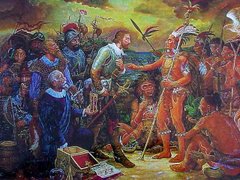
Did You Know: During the early Spanish invasion of the Caribbean, Taíno resistance included innovative defensive strategies using ahí (ají, axí), the Indigenous Caribbean pepper. Puerto Rican archaeologist Ricardo E. Alegría documented historical accounts describing the use of ahí to produce irritating dust or smoke against Spanish forces. One account cited by Alegría comes from Juan de Castellanos, who described the Taíno attack associated with the destruction of the Spanish settlement of La Navidad on the island of Española. According to the account, gourds were filled with a mixture of ashes and ground ahí and thrown into the Spanish position, where they broke apart and released clouds of irritating powder that caused the occupants to sneeze and become disoriented.
Ají was already an important part of Taíno agriculture and foodways. Bartolomé de las Casas recorded that Taíno people regularly seasoned their foods with ahí and described several varieties, including especially potent forms. Yet historical accounts indicate that Taíno people also understood how the irritating properties of ahí could be adapted for defense. In addition to ground ahí dispersed from gourds, historical scholarship describes the burning of ahí and other plant materials to create irritating smoke capable of affecting the eyes and breathing of invading forces.
These accounts challenge stereotypes that portray Taíno resistance to Spanish conquest as technologically simple or ineffective. Taíno Peoples drew upon generations of knowledge of Caribbean plants and their properties, adapting familiar materials to confront an unprecedented military invasion. What might today be compared to an early form of “pepper gas” or a “pepper bomb” was rooted not in European military technology, but in Indigenous knowledge of the environment. The historical record therefore provides another example of Taíno ingenuity, resistance, and the strategic application of traditional knowledge during the first decades of European colonization.
Sources:
Alegría, Ricardo E. “El uso de gases nocivos como arma bélica por los indios taínos.”
Castellanos, Juan de. Elegías de varones ilustres de Indias, Elegía II, “A la muerte del Capitán Rodrigo de Arana.”
Las Casas, Bartolomé de. Apologética Historia Sumaria, discussion of axí and Taíno foodways.