Sunday, January 04, 2009

Guareao


Did You Know: The Limpkin (Aramus guarauna) is a large bird that makes its home from Florida to Mexico and on through parts of South America and the Caribbean. In the Greater Antilles this bird is still commonly known by it Taino name Guareao. Its plumage is dark brown with an olive luster above. The feathers of the Guareao's head, neck, wing coverts, and much of the back and underparts (except the rear) are streaked with white. It has long, dark-gray legs and a long neck. Its bill is long, heavy, and downcurved, yellowish bill with a darker tip. The Guareao is easier to hear than see. Its common vocalization is a loud wild wail with some rattling quality, represented as "kwEEEeeer or klAAAar." This call is most often given at night and at dawn and dusk. The call of the Guareao has been used for jungle sound effects in Tarzan films and for the hippogriff in the film Harry Potter and the Prisoner of Azkaban. - - UCTP Taino News © 2009

Thursday, December 11, 2008

Taino Weaving


Did You Know - Weaving techniques for making haba (baskets), makuto (pack sacks), and hamaka (hammocks) formed an important part of ancient Taino culture. Even Christopher Columbus remarked on the finely woven cotton blankets made by the Taino during his early encounters with the island communities. Today, many of the same weaving techniques are still used by contemporary communities throughout the Caribbean. – - UCTP Taino News © 2008

Wednesday, November 05, 2008

The Hammock


Did You Know - The word “hammock” was derived from the Taino word hamaka. In 1535, European chronicler Gonzalo Oviedo noted that the hammocks he observed were well-woven and made from good quality cotton fabrics. The hammaka could function as a bed, chair, sack, or even a fishing net. The hammock is also credited for changing the 16th maritime industry as sailors began to adopt these ingenious sling-type beds for use during their voyages. Today, hammocks are part of a multi-million dollar industry and have become such a part of popular culture that they have even been used by American astronauts in the Apollo program. – - UCTP Taino News © 2008

Wednesday, October 15, 2008

Taino Regalia


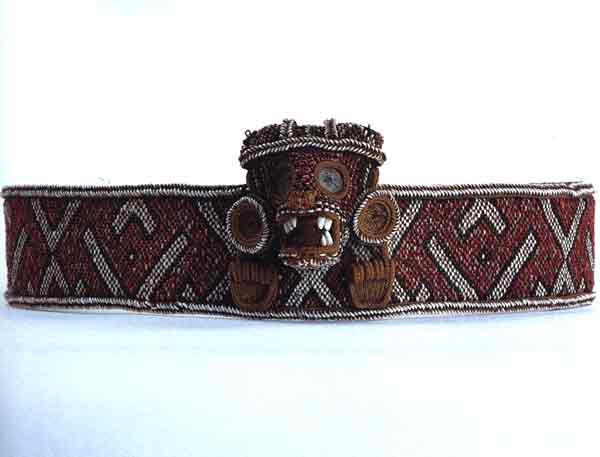
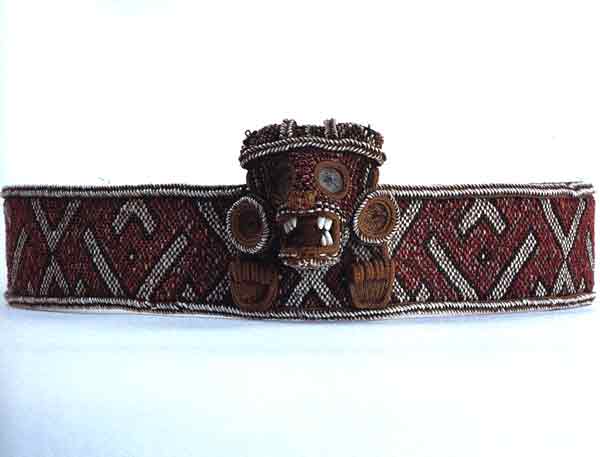
Did You Know - Taino Kasike (Chiefs) and nitaíno (community leaders) distinguished themselves with their clothing, regalia, jewelry, and other accessories. They wore garments of the finest woven sarobei (sarobey) cotton and beaded belts with geometric designs. For important occasions they sometimes donned capes made from the colorful plumage of tropical birds: parrots, flamingos, herons, and hawks, etc. Traditionally, beautifully worked shell jewelry - including necklaces and pectoral ornaments - and amulets made from gold, semiprecious stones, shell, and bone were worn. Other community members also wore types of cotton clothing and adornments as well including headbands and woven caps. Bodies were also painted with various natural dyes and body stamps were used. Ear plugs known as tatagua were worn by both men and women and today this practice is seeing a limited, but vibrant revival. - - UCTP Taino News © 2008 

Wednesday, September 24, 2008

Mayagüez


Did You Know - Local tradition holds that while the city of Mayagüez, Puerto Rico was originally named "Our Lady of the Candelaria of Mayagüez", the city’s name derives from a variation of the Taino Indian term iagües (yagüez) meaning “clear waters”. The city was eventually named just Mayagüez (pronounced Mah-yah-goo-ehz or Mah-yah-GWEHZ), a variation of the Taino term, said to mean "Land of the Clear Waters". – - UCTP Taino News © 2008

Sunday, August 24, 2008

Biha (Bija, Bixa) is a Taino Word


Did You Know - The Biha, Annatto or Achiote tree (Bixa orellana) has seeds that were ground and made into a bright red dye that the Tainos also called biha (bee-hah). According to ancient Taino tradition the color red was associated with virility and the ancestors, but this red paste also served as a mosquito repellent. Taino often covered their whole body in biha. Local tradition on various islands states that it is in the use of  red biha coloring where the derogatory term “Redskin” finds its origin. Today, biha is more often used as a natural food coloring that provides Caribbean rice with its reddish-orange color as well as the yellow color in processed American cheese. - UCTP Taino News © 2008