
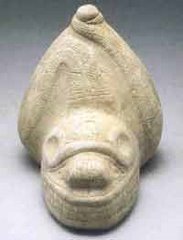
Did You Know: Dogs lived alongside Indigenous Peoples in the Caribbean long before European colonization? Archaeologists have recovered the remains of domestic dogs (Canis familiaris) from precolonial sites throughout the region. These remains have been found in refuse deposits, placed in formal burials, and fashioned into modified objects. These different contexts suggest that dogs held varied and sometimes culturally significant roles within Indigenous Caribbean communities including for the Taíno.
Researchers examined dog remains from sixteen precolonial archaeological sites using measurements and isotope analysis. Strontium and oxygen isotopes preserved in tooth enamel helped investigators distinguish locally raised dogs from dogs that had come from elsewhere. The presence of nonlocal dogs indicates that some were transported between communities—most likely aboard kanoa as people traveled and exchanged goods throughout the islands.
The study also found that these dogs consumed a considerable amount of plant-based food. This pattern is consistent with people intentionally feeding them portions of the foods prepared within their communities. The archaeological evidence therefore presents dogs not simply as wild animals living near settlements, but as companions whose lives were closely connected with Indigenous Caribbean households, travel, and cultural practices. Two Taíno terms for dogs include aon and anli.
— © 2019 UCTP Taíno News
References
Shev, G. T., Laffoon, J. E., Grouard, S., & Hofman, C. L. (2020). An isotopic and morphometric examination of island dogs (Canis familiaris): Comparing dietary and mobility patterns in the precolumbian Caribbean. Latin American Antiquity, 31(3), 632–638. https://doi.org/10.1017/laq.2020.58







No comments:
Post a Comment