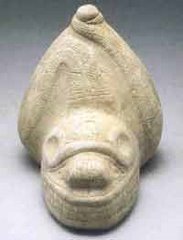
Múcaro comun, Puerto Rican Screech owl (Megascops nudipes)
Did You Know: In the ancient language of the indigenous Taino People, the term múkaro (múcaro) identified several species of owl including the Puerto Rican Screech owl (Megascops nudipes) and the Short-eared owl (Múcaro Real - Asio flammeus). A subspecies, M. n . newtoni, is endemic to the Virgin Islands, is more recently referred to locally as the "cuckoo bird." The múkaro (pronounced mOO-kah-roh) is a small-sized owl possessing a brown upperside, a light-brown to white underside, white brown lines and white eyebrows. The main diet of the species consists of large insects and is complemented with small birds, geckos and small rodents. The species calls throughout the year while hidden in thick foliage, typically at dawn. The múkaro makes a loud coo-coo call, which is the reason for its common name in the Virgin Islands. Contrary to modern folklore giving owls a negative reputation, most owls were traditionally revered by the Taino and they are one of the most popular bird motifs depicted via petroglyphs (rock carvings). Taino names for other owls include “Siguapa” (Stygian Owl - Asio stygius) and “Sihú (Sijú)”, which is used to identify the Cuban Bare-legged owl (Sijú Contunto - Margarobyas lawrencii lawrencii) and the Cuban pygmy-owl (the Sijú platanero; Sijucito; Sijú - Glaucidium vittatum).
– © 2014 UCTP Taino News
– © 2014 UCTP Taino News
References
Diccionario de Voces Indígenas de Puerto Rico by Luis Hernández Aquino (published in 1977)
Las Aves de Puerto Rico by Virgilio Biaggi (published in 1983)
Diccionario de Voces Indígenas de Puerto Rico by Luis Hernández Aquino (published in 1977)
Las Aves de Puerto Rico by Virgilio Biaggi (published in 1983)