Showing posts with label manioc. Show all posts

Thursday, August 22, 2013

The Stingray and Taino Culture


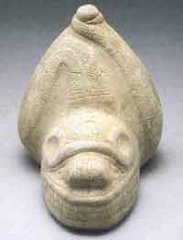
Did You Know: Since ancient times, stingrays have been a part of the Caribbean’s marine environment and the cultures of the region’s Indigenous Peoples. Taíno and other Caribbean Indigenous Peoples, for example, would traditionally use the barbed spine located toward the bottom of a stingray’s tail in various ways. Stingray barbs would sometimes be used as tips for spears and arrows used for hunting or weapons, as well as for adornments like necklaces and bracelets. Like sharkskin, the rough skin of certain stingrays were also used as a grating tool to grind iuka (yuca/cassava/manioc) into a fine powder.  Some Taino words for stingrays include Libusa, Lebisa, Sabina, and Chucho (spotted eagle ray). - UCTP Taino News © 2013

Friday, July 06, 2012

MAISI


Did You Know – The Taino word for corn is maisi or mais (maiz), which is the origin of the word “maize”. While not as important as yuka (manioc/cassava), it was a significant food source found throughout the Caribbean islands in several varieties. Traditionally, corn was eaten, roasted, off the cob as well as ground into meal. According to Spanish conquistador Gonzalo Fernández de Oviedo y Valdés, it seems that cornbread was not as favored as it molded faster than bread made from yuka. Some chroniclers stated that Taino drank a fermented corn beverage called chicha as well as a fermented yuka beverage called uiku.  A traditional Taino form of boiled corn dumpling called guanime is still made today in various forms. – UCTP Taino News © 2012

Saturday, February 25, 2012

Kasabi: Bread made from iuka (yuca)


DID YOU KNOW: Traditionally, bread made from iuka or cassava is known in the Taíno language as kasabi or kasabe. It was created by grating iuka (yuca, cassava/manioc) flour into flat disks and roasting them on flat ceramic griddles called burén over a cooking fire. Today, the baking of kasabi, now more commonly called kasabe, is modernized for increased production, but it is still presented in the original flat, round style. Whether made from bitter or sweet varieties of iuka/manioc, kasabi is known to preserve exceedingly well with a preservative-free shelf life of about 8 months. In the time of the ancient Taino, it was taken on long journeys over land and sea without spoiling, providing a sometimes a much-needed burst of carbohydrates. The bitter cassava is said to produce a kind of kasabi that was virtually “unassailable by vermin” since it retained a small amount of hydrocyanic toxin harmless to humans but harmful or deadly to insects and rodents. Hab jao (jab jao) is the Taíno name still given to the thinnest kasabi in Kiskeia (Dominican Republic). According to Taino tradition hab hao or hau hau (xau xau) was reserved for community leaders and dignitaries. Since the 1970s, kasabe production in Kiskeia has expanded the availability of this ancient Taino culinary tradition from the local to international markets. - © 2012 UCTP Taino News

References

De las Casas, B. (1875). Historia de las Indias (Vol. 1). Imprenta de Miguel Ginesta. (Original work written 1559–1561).

Rouse, I. (1992). The Taínos: Rise and decline of the people who greeted Columbus. Yale University Press.


Saturday, July 25, 2009

Taino Agricultural Science

Did You Know: The Taino developed an agricultural science based on an intimate knowledge of the world around them? For example, when planting iuka (yuca/manioc, cassava) Taino traditionally follow the lunar cycle. Why is this done? The moon phase cycle is followed because there are certain insects predators like the Bibijagua (black ants) and others who like to eat young iuka plants. These insects usually prefer to hunt during the full moon and are either dormant or less active during the “waning” moon period. When iuka plants are young they have little defenses to ward off natural enemies. The Taino planted iuka during the waning moon to allow time for the plants natural toxin defenses to develop. – UCTP Taino News © 2009