DID YOU KNOW - DNA science affirms that a majority
of Puerto Ricans can trace their American Indian linage via their maternal
lines. In 2000, a DNA study was conducted revealing a 69.6% frequency of
American Indian mtDNA
(mitochondrial DNA) among a sample of individuals who claimed an indigenous maternal ancestor. In
2005, the study was again conducted using a broader sample set of 800 random
individuals taken from throughout the island. This study concluded that
approximately that 61.3% of Puerto Ricans have an American Indian maternal
ancestry. Similar studies have been conducted in the Dominican Republic and in
Cuba. - UCTP Taino News © 2012
Saturday, August 18, 2012
Friday, July 06, 2012
MAISI
Did You Know – The Taino word for
corn is maisi or mais (maiz), which
is the origin of the word “maize”. While not as important as yuka (manioc/cassava), it was a significant
food source found throughout the Caribbean islands in several varieties. Traditionally,
corn was eaten, roasted, off the cob as well as ground into meal. According to Spanish
conquistador Gonzalo Fernández de Oviedo y Valdés, it seems that cornbread was
not as favored as it molded faster than bread made from yuka. Some chroniclers stated that Taino drank a fermented corn beverage called chicha as well as a fermented yuka beverage called uiku. A traditional Taino form
of boiled corn dumpling called guanime
is still made today in various forms. –
UCTP Taino News © 2012
Thursday, June 07, 2012
Boriken’s 1777 Census
Did
You Know – Puerto Rican Historian Salvador Brau noted
that a census taken in Boriken (Puerto Rico), in the year 1777, estimated
a population of 1,756 “pure Indians” in the area known as “Las Indieras (Indian Lands)”. Today, it
is generally agreed that this area encompasses the contemporary municipality of Maricao and surrounding areas. Maricao is still known as the "Pueblo de las Indieras (Town of Indian Settlements)" – UCTP Taino News © 2012
Labels:
Boriken,
Indieras,
Maricao,
Puerto Rico,
Salvador Brau,
UCTP
Friday, May 04, 2012
ANAMU
Did You Know - Anamu is the Taino name for a tropical plant (Petiveria allliacea) found throughout Latin America, the Caribbean, and
Florida. The leaves of the Anamu plant can be used fresh or dried and made into an herbal tea, or they
can be chewed. Anamu produces a strongly
pungent leaf and root; it is known for its distinct garlic-like smell. Throughout
the Caribbean and beyond Anamu is used as a natural remedy for many physical
ills and certain medical conditions including arthritis, skin conditions,
intestinal gas, sinus problems, pain, and even cancer. Local oral
traditions claim that Anamu has the ability to ward off bats, insects, and mischievous
Spirits. – UCTP Taino News © 2012
*Disclaimer: Any reference to medicinal use is not intended
to treat, cure, or prevent disease. Please check with your doctor or health
care professional before using.
Labels:
Amazon,
Anamu,
Arawak,
bats,
Boriken,
Caribbean,
Indigenous,
Latin America,
Petiveria allliacea,
Taino
Friday, April 06, 2012
Meals Among the Taino
Did You Know - During first contact with Europeans, many Taino communities generally observed four meals a day including breakfast, an afternoon meal, an evening meal, and a night meal. Spanish chronicler, Bartolome De Las Casas noted that between the evening and night meal, some Taino took an emetic, and went to a nearby river to purge themselves. Following this they would devote their attention to the nightly meal as well as to dancing and refreshments. Christopher Columbus remarked on how Kasike (Chief) Guakanagari and his people washed their hands with certain herbs after they shared a meal together. - UCTP Taino News © 2012
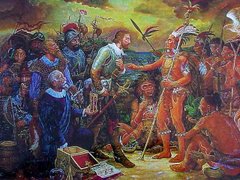
*Illustration by Modesto Garcia.
Labels:
Columbus,
Guacanagari,
Guakanagari,
Hispanola,
Las Casas,
Taino
Thursday, March 22, 2012
World Water Day 2012
DID YOU KNOW - Water = Atl (Nahua), Ba’am (Yaqui), Ba’huí ,(Rarámuri), Hitya (Né Cha’ cñâ), Intáwi (Matlatzinca), Itsi (P’urépecha), Ja’ (Kiliwa), Nandá (Mazateco), Neppi (Kikapú)(Kikaapoa), Niza (Zapoteco), Sudagi (O’odham), Xkán (Hamaispini), Ama (Cherokee), Ko (Mapuche), Kuuyi (Hopi), Kóh (Jicarilla Apache), Tú (Navajo), Tuu (Atna), Tó (Carrier), Chuu (Gwich’in), To (Hoopa), Tutlxut (Tolowa), Mni (Lakota), Miri (Hidatsa), Bili (Crow), Ni (Osage), Nin (Ioway, Otoe and Missouri), Nippee (Shawnee), Sukquohana( Powhatan), Nebi (Abenaki), Nupi (Mohegan), Mbi (Delaware), Aohkíí (Blackfoot), Mahpe (Cheyenne), Nipiy (Cree), Nibi (Ojibway), Baa’(Shoshone), Oka (Choctaw), Ohneka (Mohawk), Gántl ( Haida), Hin (Tlingit), Tstoóxo (Sanish), Kiítsu' (Pawnee), Oni (Lokono), Ni (Taino)... UCTP Taino News 2012
Subscribe to:
Posts (Atom)