Showing posts with label Caribbean Indigenous Peoples. Show all posts

Wednesday, March 01, 2017

Guaiaba is Taino

Did You Know: 
Guaiaba 
(Guayaba) is the Taíno word for the guava fruit, which is native to the Caribbean, Central, and South America. The fruit is edible, having a sweet soft interior with a thin delicate rind. The rind varies in color from green to light green or yellow in its mature or "ready to eat" state. When eating guava fruit two things you will notice is that it has small hard seeds as you bite into it as well as a distinctive aroma. Guava is said to be a good source of Vitamins A, B, and C and is a common flavor of juices and desserts in the Caribbean. Guaiaba leaves have been used as a remedy for diarrhea and the leaves are considered to have antimicrobial properties. The same anti-diarrheal substances which are useful in "folk medicine" may also cause constipation in the case of consumption of large amounts of guava fruit. In Cuba, guaiaba leaves are sometimes used in barbecues providing a savory, smoked flavor to the meat. According to Taino oral tradition, the chief or guardian of Koaibei (Coaybey), the Taino spirit world, is named Maketaurie Guaiaba. Taino oral tradition also states that ancestral spirits or hupia leave Koaibei in the evenings, sometimes taking the form of bats who feed on the guaiaba fruit.

- 
© 2017 UCTP Taino News


References

Morton, J. F. (1987). Fruits of Warm Climates. Julia F. Morton.

Arrom, J. J. (1989). Mitología y artes etnología taínas [Taíno Mythology and Arts Ethnology]. Ediciones Panhouse. 

Monday, September 06, 2010

Jamaican Jerk

Did You Know: The culinary style known as "Jamaican jerk" refers to a method of slow cooking meat, traditionally seasoned with or cooked over the wood of the pimento (allspice). The use of ahi (aji), the Taino word for pepper, pronounced "ah-hee," is another signature ingredient with "Scotch bonnet peppers" among the most widely used.  Additional spices were also incorporated and dry-rubbed or marinated into the meat. Locally, this tradition is said to go back more than 1,200 years to when indigenous Taino Peoples, the island's original inhabitants, used these methods before cooking the marinated meats over a type of  wooden grate called barbakoa. From this Taino term, the English word barbecue originates. The term jerk is said to originate from the word charqui, an indigenous word of Quechua origin for dried meat, which was incorporated into Spanish, eventually becoming jerky in English. -- UCTP Taino News © 2010 

Monday, August 09, 2010

The Taino Duho and UNESCO...

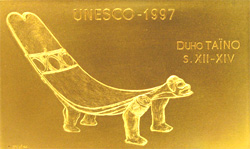
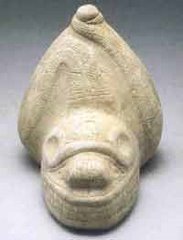
Did You Know: In 1997, UNESCO had an ongoing project, Insula 2000, and chose this opportunity to strike a medal in memory of the Taino, awarded to individuals who have distinguished themselves in the defense of peace and democracy in Latin America and the Caribbean. The obverse side features a duho, a low four-legged ceremonial chair sculpted from a guaiakan tree native to the many Caribbean islands. Dating back from the 12th to the 14th century, the masterpiece of Taino art displayed on the UNESCO medal is currently in the possession of the Musée de l’Homme in Paris. According to Taino understanding the carved effigy represents a particular Spirit or "Cemi" endowed with the faculty of "moving". During ceremonial rituals, entranced spiritual leaders or community leaders called Kasike sit on the duho and “travel” to dialogue with the Spirit World. On non-religious occasions, a distinguished guest can be invited to sit on this chair which, for UNESCO, symbolizes cultural exchanges and understanding between peoples. The reverse of the medal is plain. - - UCTP Taino News © 2010

Tuesday, July 20, 2010

The Traditional Taino Diet

Did You Know: The traditional diet of the Taino was based mainly on community cultivated agricultural products, supplemented with wild fruits as well as fishing, and limited hunting. Root tubers such as yuka (manioc) and batata (sweet potatoes) were cultivated along with many other diverse food crops like maisi (corn), mani (peanuts), calabasa (pumpkin), iaiama (pineapple), cahuil (cashews), beans, aji (peppers) etc. The hunting of small game such as birds, small mammals, and reptiles such as iguanas, and snakes was also practiced daily by community members. The ocean and rivers were also exploited in a sustainable manner for their bountiful resources. The Taino harvested edible marine-life, including conch, oysters, lobsters, clams, and crabs. Fish were caught with bone and shell hooks, large mesh nets, nasa (fish traps), spears, and bows and arrows. Some of the larger marine-life that the Taino encountered and hunted included the manati (sea cow), tuna, sea turtles, and sharks. Occasionally, even a pilot whale was taken for by various communities. Taino survival was secured by the application of ancient traditional knowledge, which included practical and medicinal knowledge of plants, an deep understanding and symbiotic relationship with their environment, and the ability to apply appropriate tools and techniques. - UCTP Taino News © 2010

Thursday, December 17, 2009

The Caribbean


Did You Know: The word “Caribbean” is said to be derived from the name of one of the dominant indigenous (Amerindian) groups in the region at the time of European contact during the late 15th century, the Caribs. While their continues to be debate among scholars as to the origin of the word, at least one of the communities currently identified as "Carib" call themselves Kalinago. The island of Boriken (Puerto Rico) itself was also identified as Carib in some old maps. Some of the other Indigenous Nations identified in the region are Arawak, Ciboney, Galibi, Garifuna, Igneri, Lucayan, and the Taino. - - UCTP Taino News © 2009

Wednesday, November 18, 2009

Manatee or Manati


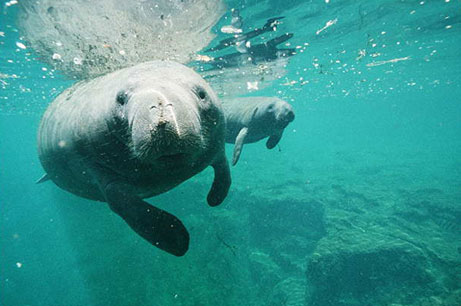
Did you know: Manatees are said to have evolved from four-footed land mammals more than 60 million years ago. According to scientists their closet relatives are reported to be the dugong, and the African Elephant (distantly).There are three species of manatees, including the West Indian manatee. The Florida manatee, which can eat up to 100 pounds (45 kilograms) of vegetation a day and weigh a half-ton on average, is a subspecies of the West Indian manatee. Manatees can move readily between salt water and fresh water, but they can't survive in cold water for long periods. In the U.S. the manatee is still listed federally as an endangered species yet in the state of Florida it it is listed only as a “threatened” species. The word manatee is considered an indigenous "loan word" found in both the Taino and Carib languages. Among the Carib the term Manati is said to translate to mean "breast." Traditionally, the Taino consider this animal as sacred as North American Indigenous Peoples consider the buffalo sacred. Prior to colonization Taino hunters used every part of the animal for food, tools, and other resources. – - UCTP Taino News © 2009

Friday, September 18, 2009

Guaitiao


Did You Know:
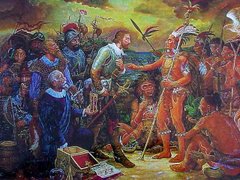
Traditionally, the Taino people practiced an elaborate name exchange ceremony to build their family and community alliances. This “making relations” ceremony called GUAITIAO was recorded by early chroniclers where they documented Taino Kasike (chiefs) practicing this custom with Spaniards. Hence, the European took the name of the “Indian”, and vice versa. One of the most renowned of these exchanges was between conquistador Ponce de Leon and a powerful Boriken Chief named Agueibana. The name of the Kasike’s mother was changed to the Spanish doña Inez, and his brother took the name of a captain in Ponce de Leon's company. This exchange of names, accompanied with ceremonies, symbolized a lasting bond that was supposed to link the families together in solidarity for generations. While the Taino respected the Guaitiao custom as sacred, most Spaniards revealed their disregard for it by their actions against the Indigenous Peoples of the islands. – UCTP Taino News © 2009

Thursday, August 27, 2009

Iuka or Yuca or Cassava?


Did You Know: Iuka (yuca), also known as cassava or manioc (Manihot esculenta) , is a starch rich plant, which thanks to the Taino People is now grown worldwide. Iuka is a part of the Euphorbiaceae family, and its roots are described as long with a thick brown rind that encases the edible part. Cassava is major source of carbohydrates, and it contains large amounts of calcium, phosphorous, and Vitamin C. Unfortunately, iuka is very low in protein and other important nutrients. An interesting fact about this root tuber is that it in fact contains small traces of cyanide; in some cases from about 20 milligrams and above. Boiling the root will eliminate the toxicity. Iuka can be prepared and eaten in many ways. Cassava bread or kasabi/kasabe, a traditional crispy flat bread made by Taíno and other Indigenous Peoples of the region is still popular throughout the Caribbean. It is eaten with fruit spreads, butter, or a variety of other foods. Boiling the root is the most common way of eating iuka, and it can be a replacement for potatoes or plantains during meals. Iuka can also be used as a replacement for potatoes in dishes such as purees, dumplings, gnocchi, stews, or soups and it is the main ingredient in Tapioca. Traditionally, iuka is believed to have anti-inflammatory and anti-viral properties and is sometimes used to treat arthritis, stomach disorders and even diabetes. - © 2009 UCTP Taino News 


Iuka (yuca) root tubers

References

Coker, R. D., Nagler, M. J., & Blunden, G. (2004). The processing of cassava to reduce cyanogens. Journal of the Science of Food and Agriculture, 84(6), 591–595.

Cardoso, A. P., Mirione, E., Ernesto, M., Massaza, F., Cliff, J., Reza, F., & Bradbury, J. H. (2005). Processing of cassava roots to remove cyanogens. Journal of Food Composition and Analysis, 18(5), 451–460.

Wednesday, October 15, 2008

Taino Regalia


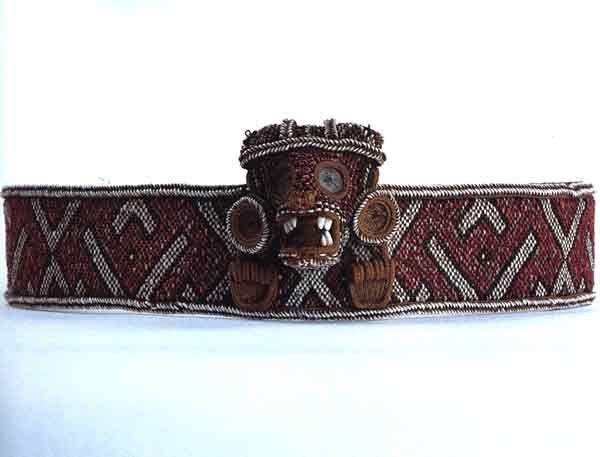
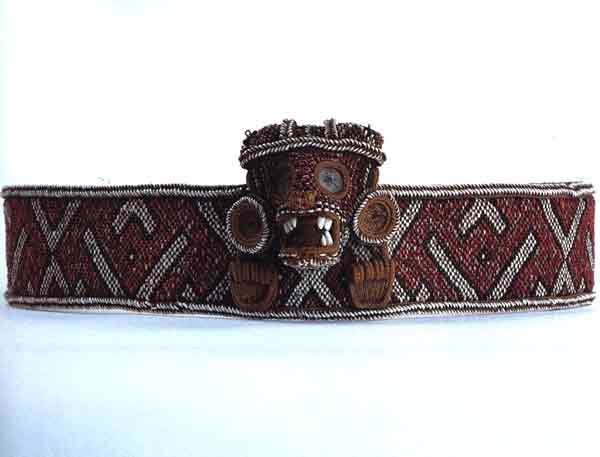
Did You Know - Taino Kasike (Chiefs) and nitaíno (community leaders) distinguished themselves with their clothing, regalia, jewelry, and other accessories. They wore garments of the finest woven sarobei (sarobey) cotton and beaded belts with geometric designs. For important occasions they sometimes donned capes made from the colorful plumage of tropical birds: parrots, flamingos, herons, and hawks, etc. Traditionally, beautifully worked shell jewelry - including necklaces and pectoral ornaments - and amulets made from gold, semiprecious stones, shell, and bone were worn. Other community members also wore types of cotton clothing and adornments as well including headbands and woven caps. Bodies were also painted with various natural dyes and body stamps were used. Ear plugs known as tatagua were worn by both men and women and today this practice is seeing a limited, but vibrant revival. - - UCTP Taino News © 2008 

Monday, May 05, 2008

Parrots and Taino

Did You Know - The ancient Taino people developed an ingenious and sophisticated way of trapping certain birds especially parrots. To capture the birds, children would wear a specially woven hat made from palm tree material, and then hide in selected trees. Once in the tree, the children would also coat various branches with a special sticky resin. Finally, for this trap to be successful the child hunter would take along live parrot whose squawks would attract other birds to the tree. Once landing in the trees, the parrots would become stuck to the resin and easily captured by the young Taino hunters. Parrots were favored among community members because of their beauty and the ability to be domesticated. Some Taino terms for parrots include Kaika, Paraka, and Higuaka. – UCTP Taino News © 2008

Wednesday, April 02, 2008

Hutia are a part of the Taino World


Did You Know: The Hutia is a large indigenous rodent that inhabits various Caribbean Islands. The average size ranges from about 20 to 60 centimeters (8-24 inches), and they can weigh up to 7 kilograms (15 pounds). At least 20 species of hutia have been identified, but as many as half may be extinct. Among those that are said to have perished are the giant hutia, which are said to have resembled the modern capibara. Tails are present among the species, varying from vestiges to prehensile. Hutia have stout bodies and large heads. Most species are herbivorous, though some consume small animals. Like other rodents most hutia are nocturnal, but instead of burrowing underground, they can nest in trees or even rock crevices. The word Hutia is a word from the Taino language and during ancient times these rodents were hunted regularly for their meat. The consuming of hutia continues among some traditionalists; however, this animal is endangered in many countries. Hutia once lived throughout most all regions of the islands from the coast to the forest to the sabanas. - UCTP Taino News © 2008

Sunday, March 30, 2008

Jamaica and the Taino


Did You Know - The Jamaican national motto is ‘Out of Many One People’, based on the population’s multi-racial roots. This motto is represented on the Coat of Arms, showing a male and female member of the Taino Tribe standing on either side of a shield which bears a red cross with five golden pineapples. The crest shows a Jamaican crocodile mounted on the Royal Helmet of the British Monarchy and mantling. - UCTP Taino News © 2008

Monday, February 11, 2008

Lunar Eclipse Saved Columbus


Did You Know - According to Spanish accounts, during Christopher Columbus' fourth and final voyage in 1504, the admiral saved his starving and shipwrecked crew by using an elaborate plan designed to deceive Jamaican Taino into feeding them. Columbus predicted his Christian god would make the moon "inflamed with wrath" and "do evil things to them" if his men were not fed. A lunar eclipse appeared, making his prediction come to pass. Columbus was able to accomplish this rouse thanks to Johannes Regiomontanus, a German scientist who published an almanac that charted solar and lunar eclipses during 1475-1506. Studying the almanac, Columbus learned that a total eclipse of the moon would happen on Feb. 29, 1504. Columbus and his crew were shipwrecked in Jamaica on June 25th 1503. Local Taino initially welcomed him and provided the castaways with food and shelter. However, after being stranded for more than six months, at least half of Columbus’ men mutinied - robbing and murdering several Taino. After this horrific turn of events, the Taino refused to assist Columbus any longer and planned to do away with the crewmen. Seeing his situation as desperate and armed with the knowledge contained in the almanac, he called a meeting with a local Taino kasike (chief) to share an "ominous prediction" before the scheduled eclipse. He announced to the kasike that the Christian god was “angry” because the Taino “were no longer supplying his men with food.” Columbus then stated in “three nights” he would all but obliterate the rising full moon, making it appear "inflamed with wrath;" a signal that “evils” would soon be inflicted upon all the islanders. When the moon turned an "eerie red" as he had "predicted," the reportedly “terrified” Taino brought food to Columbus' men, and allegedly pleaded with him to return it to normal. Columbus announced he would privately confer with his god, and when he returned he said the moon would revert back to its natural state, and it did. The Taino continued to provide supplies for Columbus and his men until they left Jamaica when a relief ship from Hispaniola finally arrived on June 29, 1504. – UCTP Taino News © 2008

Monday, July 02, 2007

Baseball

Did You Know - Baseball as sport has its origins in the Taino batu game played in Cuba and throughout the Caribbean. Spanish chroniclers who traveled to the islands during the conquest and colonization periods provide evidence of this activity. The batu game was played at the batei/batey (ball field/court/ceremonial ground) and players used a ball made of resin and shaped leaves. As recorded in Cuba, in some cases, this ball was hit with an instrument similar to an oar or spade. According to Cuban linguists there is a relation in the origin of the words bate (bat) and batear (hit) with the corresponding words batey and batu used by the Tainos. – UCTP Taino News © 2007

See also:

Tuesday, April 10, 2007

Batu is a Taíno Ball Game


Did You Know: Batu is an ancient Taíno ceremonial ball game, which has been regaining popularity in the Dominican Republic and Puerto Rico over recent decades. Similar to ball games played by Indigenous Peoples in Mesoamerica, opposing teams use a rubber ball in ways reminiscent of volleyball but without a net or the use of their "hands." 15th-century European colonizers marveled at the agility of Taíno ball players, men and women, and the game's main piece of equipment - the rubber ball. Europeans had never before seen this Taíno innovation. The Taíno used the sap/latex from certain trees, together with plant fibers, to construct the ball. Batu was used for conflict resolution, as well as for the fulfillment of certain spiritual and secular community needs. Besides oral tradition, the importance of Batu in ancient Taíno society is affirmed by the number of ball courts or batei "uncovered" by archeologists throughout the islands. The batei (batey) or ceremonial grounds were used not only for the game of Batu but for community ceremonies called "areito". The revival of Batu ball games have been documented in Puerto Rico (Jayuya) and the Dominican Republic (Azua) since the 1970s. The community members in the Dominican Republic currently maintain three Batu leagues each with their own leaders.- UCTP Taino News (c) 2007 

Friday, February 09, 2007

Taíno Warriors

Did You Know: The Taíno were well-renowned for their observance of a culture of peace, yet they did not willingly succumb to Spanish colonization. In fact, not long after Columbus’s arrival, Taino people on the island of Bohio (now Haiti/Dominican Republic) successfully revolted against the first Spanish attempts to conquer their ancient island homeland. This Taino offensive against the Spanish invaders was carried out as early as in 1492 with the destruction of the Fort Navidad following Columbus’ return to Spain. Upon his return to the fort, Columbus learned that the Taino had killed all his men in a swift military operation led by Kaonabo (Caonabo), a chieftain or Kasike of Maguana, an indigenous territory near the center of the island. The rape of Taino women by the Spanish colonizers was among the main reasons the Taino turned to hostility. Kaonabo led a resistance against the Spaniards until he was finally captured in 1494 and imprisoned. Following Kaonabo's imprisonment, his brother Manikateh mounted an unsuccessful attempt to free him and was also imprisoned. According to Spanish sources, Kaonabo is said to have perished at sea while on route to face the Spanish Crown in 1496. - © 2007 UCTP Taino News 

References

Rouse, I. (1992). The Tainos: Rise and Decline of the People Who Greeted Columbus. Yale University Press.

Wilson, S. M. (1990). Hispaniola: Caribbean chiefdoms in the age of Columbus. University of Alabama Press. 

Friday, January 05, 2007

Being Called Indian...


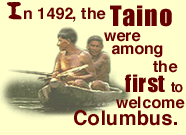
Did You Know: The Taíno were the first Indigenous Peoples of the Western Hemisphere to be called “Indians”. According to historic sources the misnomer was applied by Christopher Columbus on his first trip to the Caribbean in 1492. This was the beginning of a legacy of “first” for this Caribbean Indigenous First Nation.The word "Taíno" means "good people" in the Taíno language (Tai = good and "no" = is a plural suffix used in this case to mean 'people').– © 2007 UCTP Taino News

References

Rouse, I. (1992). The Tainos: Rise and decline of the people who greeted Columbus. Yale University Press. 

Barreiro, J. (2001). Taíno: A novel. Arte Público Press.